The Sawed-Off Shotgun
There’s lot more to short barreled shotguns than the villainous trope

An infamous addition to any villainous armory, the history of sawed-off shotguns, shows a curious way in which a moral panic gets weapons banned because no particular thinking was done by the legislators enacting the ban, and how such bans are upheld by courts using rational basis as a level of review.
The sawed-off shotgun made its way into 2nd Amendment law office history as the weapon that was central to the Supreme Court’s 1939 Miller decision, in which they ruled that such weapons aren’t part of a well-regulated militia. Thus, weapons that weren’t of military utility weren’t protected by the 2nd Amendment. The Miller decision didn’t specifically say that the 2nd Amendment didn’t protect an individual right to keep and bear arms, but most lower courts and law professors still read it that way, at least until the “standard model” of the 2nd Amendment was adopted in the Heller decision 69 years later. The standard model (and it was a marketing stroke of genius to call it that) was that the 2nd Amendment protected an individual right to keep and bear arms. To get Heller as decided while not overturning Miller, one must read Miller very narrowly as simply making a ruling against guns of supposed non-military utility, like a sawed-off shotgun, as if it is saying nothing against the rest of the potential weapons an individual citizen, who was not part of a militia, could keep and bear.
The irony of the Heller decision is two-fold as it pertains to sawed off shotguns. First, short barreled shotguns are absolutely of military and self-defense utility, a fact that was well known since before WWI. The secondly irony is that the result of the Heller decision’s diminishing Miller into such a narrow scope with the language of saying that “arms in common use” are protected, is that it carves out any sort of new advanced weaponry that the military adopts, but which are not commonly owned by civilians, from being protected by the amendment. The irony here is that because the theoretical purpose of the 2nd Amendment is that a well-armed populace is a deterrent to a tyrannical government, Heller would keep civilians from getting any of the newest and best items because they’re not “arms in common use.” Better, from a purist’s viewpoint, would have been to say Miller was wrongly decided. I’m fairly sure Scalia couldn’t muster the votes for that, and it’s an indictment of the problem with Originalism. And I write broadly as a supporter of Originalism.
Imagine in 20 years the military-industrial complex (which is focusing on drones and missiles right now from a kinetic standpoint), managed to make laser pistols a reality. Since those Buck Rogers guns would not be in common use, assuming they were developed by the military and fielded only by the military, such arms would not be protected under Heller. They wouldn’t be “in common use.” The result would be Heller making the soldier far better equipped than a civilian, which is antithetical to the purpose behind the 2nd Amendment.
So far, at least, that situation hasn’t happened for two reasons. The first, is that there is a ton of money to be made selling guns to a nation with more guns than people, and which has an insatiable appetite for them. Developments are often created for the civilian market first before the painfully slow and bloated military procurement process picks up on them. It’s like the military (wittingly or unwittingly) uses the typical American consumerist gun owner as a field tester for new stuff to pick and choose from.
Secondly, firearms technology has mostly reached a plateau. Smokeless gunpowder firing copper cased lead bullets from brass cartridges is more than a century old technology, and until things like caseless ammunition are created, all improvements are marginal. The only thing making the gun of 2025 better than the gun of 1898, is the stacking of small improvements in metallurgy, ammunition, optics, etc. on top of each other. The US military’s newest battle rifle is an attempt to push all these things together in one package. The M4, a derivative of the M16 from the Vietnam era, has reached its maximum ability to be improved upon by these marginal enhancements.
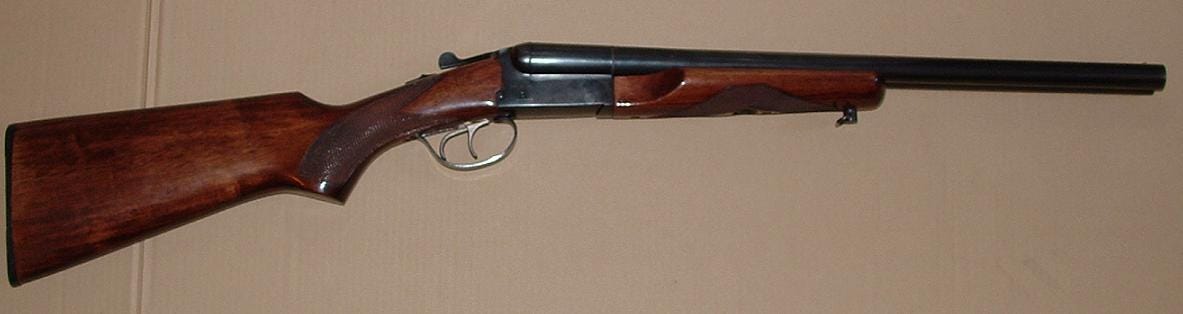
After that rather long aside, let’s get back to short barreled shotguns. The fact is that they were somewhat common as “coach guns” in the frontier era. A coach driver would have one under his seat, in case of bandits. A longer barreled shotgun wouldn’t fit under the seat, or be as useful to a man who would also have to be handling horse reins at the same time.
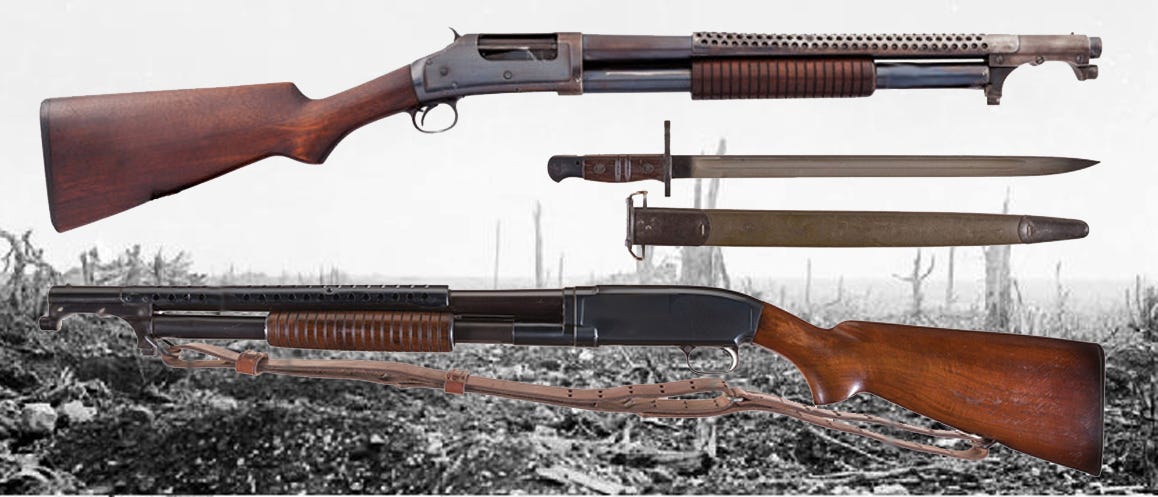
Winchester made 20-inch barrel pump action shotguns as far back as 1898 called “riot guns,” marketing them towards police. Similarly, the US military issued short barreled shotguns for trench clearing in WWI, which the Germans officially protested as violating the laws of war.
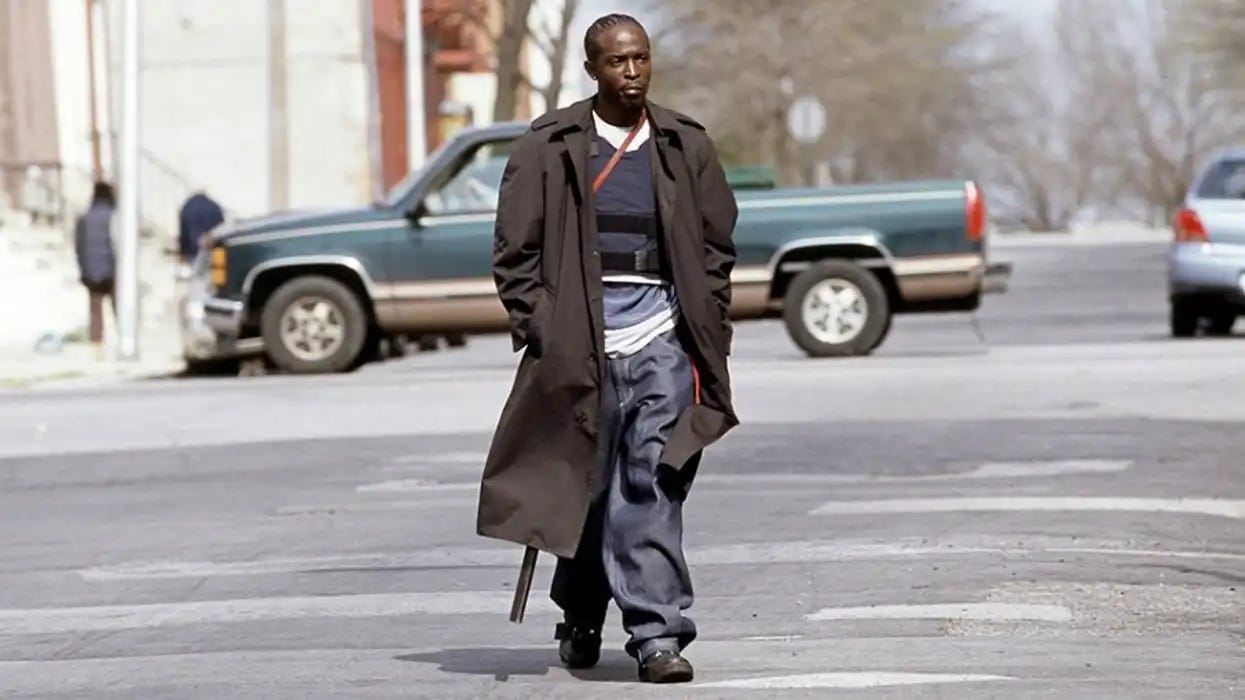
It’s a well-known fact that short barreled submachine guns and shotguns are a way to put a lot of projectiles towards a target at short range, and that they are easier to use and aim than a handgun. With shotgun the trade-off is reduced ammunition capacity. As such, because they are also easy to conceal under a long coat. The villainous bank robber and outlaw Clyde Barrow developed a quick draw technique by pulling one hanging from a cord around his neck that was concealed under a coat. As any viewer of the TV drama The Wire (2002-2008) knows, the anti-hero Omar, who robbed drug dealers in bad luck Baltimore, made use of a short barrel shotgun in just the same way. Perhaps the writers researched such things, something missing in Hollywood today.
Prohibition Era gangsters made, as far as the literature of the era says, a fair bit of use of sawed-off shotguns. They are easy to produce and effective. In the Prohibition era one could get a fully automatic Tommy Gun for the equivalent of $185-$210, or about $3,200 of today’s dollars. Yet a humble shotgun could, with hacksaw, after being submitted to some bubba gunsmithing, get you almost as much firepower at close range, for at least a few shots. Plus, it was concealable. They are far deadlier than a handgun and you don’t need a violin case to hide one in.
The Gun Control Act of 1934, responding to the Prohibition Era gangsters, banned short barreled shotguns, or more technically, classified them as NFA items requiring a $200 tax stamp. From a legal definition, any shotgun that has less than 18 inches in barrel length and that is less than 26 inches overall is an NFA shotgun. Caveat emptor (see note 1).
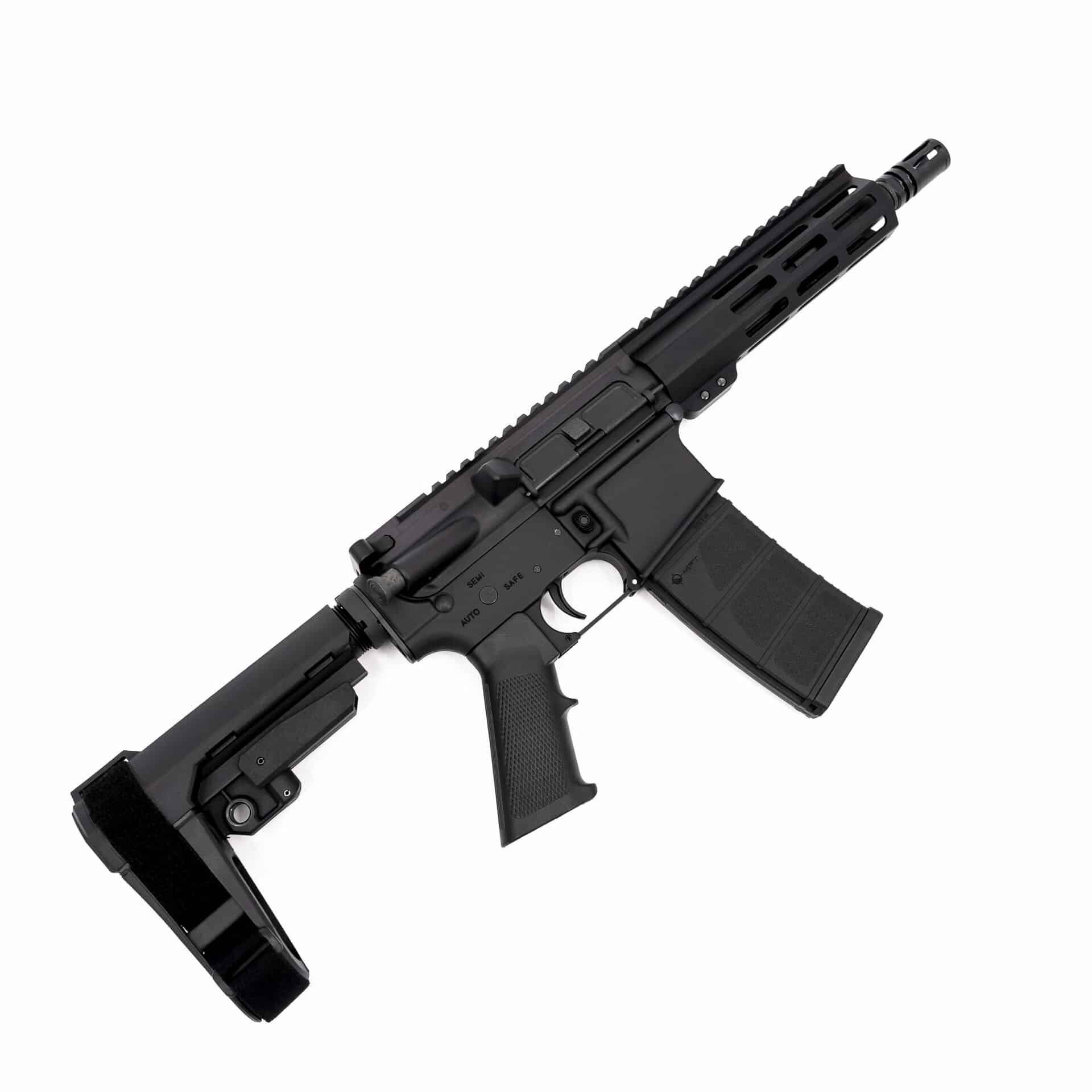
These days, the enterprising company Mossberg has found a way around the NFA ban on short barreled shotguns. It’s essentially the same way the gun companies sell “pistols” with “arm braces” that the people shooting them never actually strap onto to their arms but rather use as makeshift buttstocks. This is the way the American gun owner get around the similar Gun Control Act of 1934 ban on rifles with barrels of less than 16 inches. What you see below is, legally speaking, a pistol, NOT a rifle.
Behold, the Mossberg Shockwave.
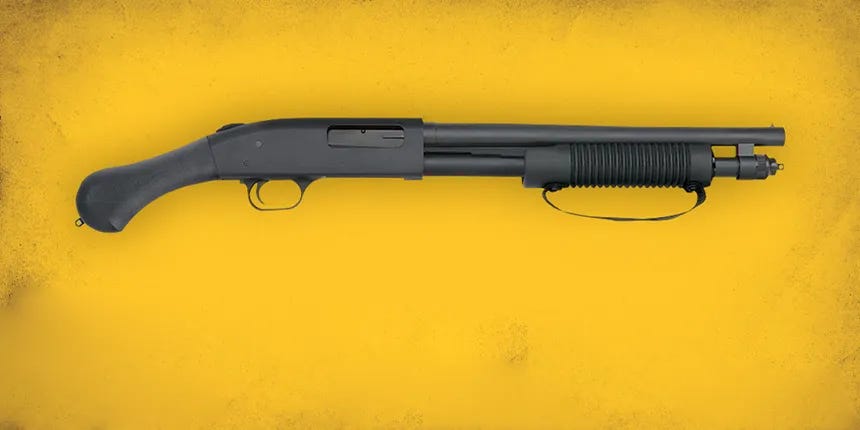
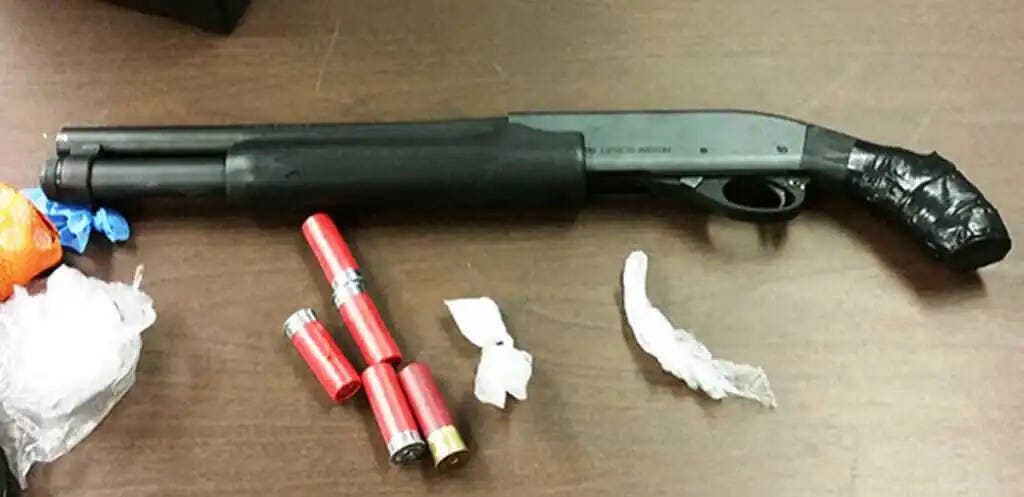
It’s not legally classified as a short-barreled shotgun by the ATF but rather is a “pistol grip firearm.” The reason it’s legal as a short barreled shotgun is because it you can’t put it to your shoulder (no buttstock), and because it never had a buttstock in the first place that was sawed off. Thus, it’s legal, whereas owning the gun below is federal felony. (Bonus points to you if you see the major issue with the ammunition that was seized along with the gun).
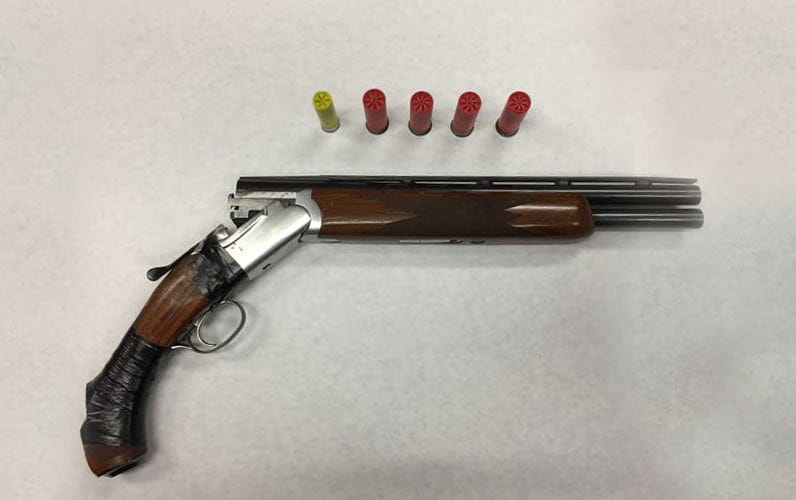
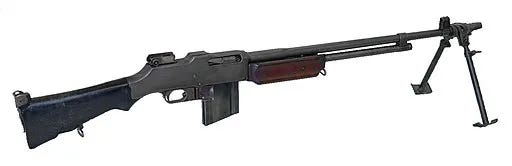
The 1934 ban on short barrel shotguns was a less than thoughtful reaction to a perceived crime problem with such guns, which the Supreme Court upheld with zero analysis of historical accuracy of the military or self-defense utility. Meanwhile, fully automatic machine guns could be had if you had $200 for the tax stamp and the scratch for whatever a Browning Automatic Rifle was going for in 1934.
Firearms companies today use loopholes the size you could drive a truck through to make non-NFA short barreled shotguns that anybody can pick up at the friendly local gun store. Sawed off? No, but they may as well be in terms of use and practicality.
This essay was originally intended to be much longer, as it went into how the same pattern played itself out with switchblade knives, made verboten in many jurisdictions after a moral panic from 1950s gangster movies, and with nunchucks, also banned in many jurisdictions after a moral panic from 1970s kung fu movies. A steak knife and the humble wooden stick are better weapons than a comparatively fragile switch blade knife and an awkward two-piece stick connected by small chain. With nunchucks, you’re just as likely to clonk yourself in the head rather than your opponent unless you’re highly proficient in the use of them. The silliness of banning switchblades and nunchucks after movies making them seem super dangerous shows, if nothing else, the power of Hollywood. Thankfully, bans on switchblades and nunchucks are most repealed, as should be the one on short barreled shotguns in a world where you can get a Mossberg Shockwave for $700 (plus tax).
------------------------------------------------------------------------------------------
Note 1: Randy Weaver, of Ruby Ridge fame/infamy, was (according to several sources) sold a shotgun with a 17-3/4 inch barrel by a government informant. Law enforcement sources say Weaver cut two barrels short himself, creating two illegal short-barreled shotguns, but they offered to drop the charges if he would infiltrate nearby white supremacist organizations. Weaver refused and a court date was scheduled. Due to an administrative oversight, Weaver’s notification of his court appearance was one month later than the actual date. When Weaver inevitably failed to appear a warrant was issued for his arrest.